
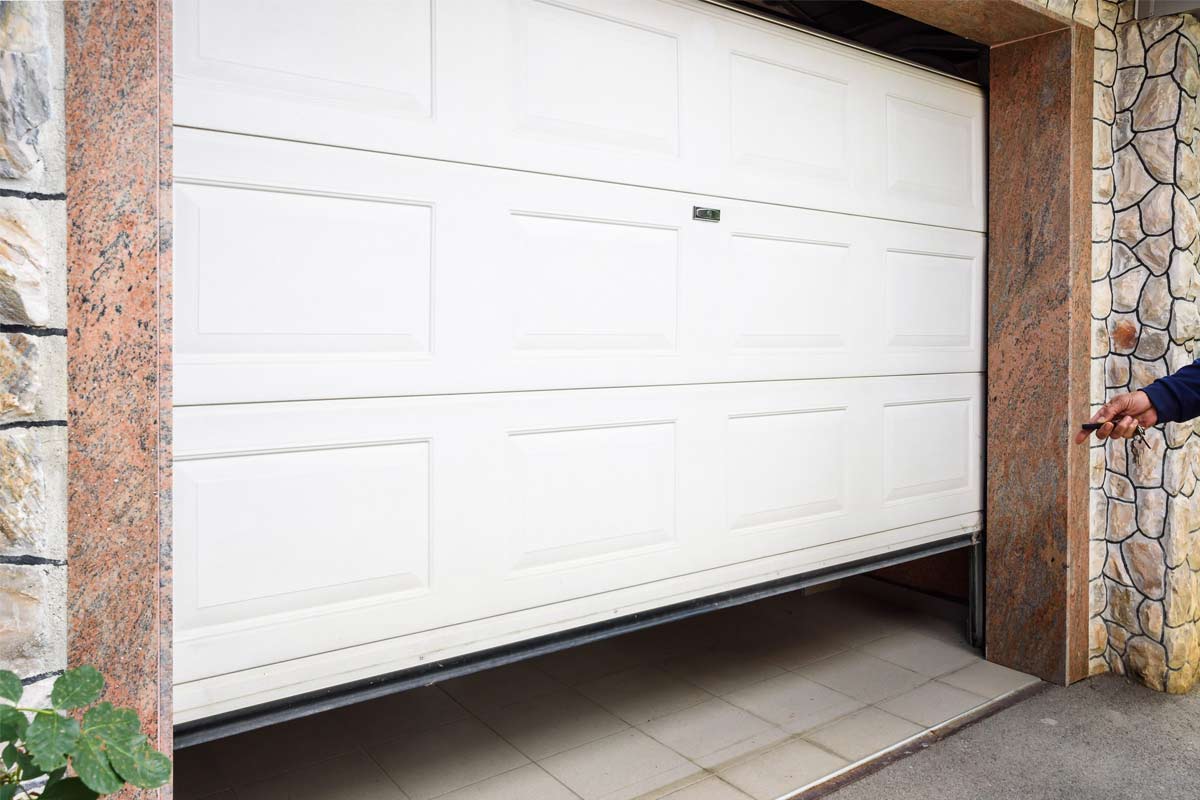
That jarring shriek of metal on metal. The shuddering groan that echoes through the house every morning. When November’s first true cold snap arrives, a noisy garage door isn’t just an annoyance; it’s a warning. As temperatures plummet, the components of your garage door system contract, lubricants gel, and minor issues become ear-splitting problems. That racket is your door crying for help.
Ignoring it can lead to a complete breakdown, often on the bitterest day of the year. However, many of these noises are not a sign of catastrophe. They’re simple maintenance reminders, and you can solve many of them yourself in under an hour.
Why Your Garage Door Hates the Cold
To silence the noise, you must understand its source. Canadian cold is the natural enemy of your garage door’s moving parts.
- First, metal contracts. This simple physics means tracks and hinges get tighter while the bolts holding brackets can loosen, causing rattles.
- Second, lubrication gels. The grease that keeps parts moving smoothly thickens in freezing temperatures, turning into a sticky sludge. This causes a loud grind instead of a quiet glide.
- Finally, materials harden. Nylon rollers and rubber weatherstripping become brittle. A stiff roller won’t roll smoothly, and a frozen bottom seal will slam against the concrete instead of cushioning the landing. All these issues create noise-causing friction.
Your Quick-Fix Toolkit
You don’t need a professional’s full truck, but a few specific items are essential. Gathering them first will make the process ten times smoother.
- High-Quality Garage Door Lubricant: This is the most critical item. You MUST use a spray lubricant specifically designed for garage doors. These are typically silicone- or lithium-based and are rated for low temperatures.
- A Word of Warning: Do NOT use WD-40. WD-40 is a solvent and degreaser, not a long-term lubricant. It will strip away any existing grease and attract dust, making the problem worse in a matter of weeks.
- Socket Wrench Set: A 7/16” or 1/2” socket will handle the vast majority of bolts on your door system.
- Cleaning Rags: You will need several.
- Brake Cleaner or Degreaser (Optional): For cleaning truly gummy, old tracks.
- Sturdy Step Ladder: For safely reaching the opener and top track.
- Safety Goggles and Gloves: Non-negotiable. You’ll be spraying lubricants and working near springs.
A Systematic Takedown of Squeaks, Groans, and Grinds
The best approach is to treat your door like a patient. Diagnose and treat each component one by one, starting with the easiest fixes. Always perform maintenance with the garage door closed and the opener unplugged unless an instruction specifies otherwise.
Easy Fix 1: Tighten the Hardware (To Stop Rattling)
This is the simplest fix and often solves loud rattling and shaking.
- The Sound: A loud, vibrating rattle that shakes the whole door as it moves.
- The Cause: Your door moves hundreds of times a year. This vibration, combined with the metal contracting in the cold, works bolts and nuts loose.
- The Fix: Take your socket wrench (a 7/16” is most common) and go over every single bolt you can see.
- Tighten the bolts that hold the hinges to the door panels.
- Tighten the bolts that hold the track brackets to the wall.
- Check the bolts holding your opener motor to the ceiling brackets.
- CRITICAL SAFETY WARNING: Do NOT touch, tighten, or adjust the bolts on the bottom bracket of the door (the one holding the lift cable). This bracket is attached to the springs and is under extreme tension. Tampering with it can cause severe injury. Just check the bolts on your panel hinges and wall tracks.
Easy Fix 2: Clean the Tracks (To Stop Rumbling)
This is the most common mistake homeowners make. You must clean the tracks, not lubricate them.
- The Sound: A rough, bumpy, or scraping rumble.
- The Cause: The tracks get caked with dirt, road salt, and debris. This creates an obstacle course for the rollers.
- The Fix:

- Take a damp rag and wipe the entire inside surface of both the vertical and horizontal tracks.
- If the grime is thick and greasy, use a rag dampened with brake cleaner or a good degreaser.
- Wipe it dry. The rollers need a clean, smooth surface to roll on, not a greasy one. Lubricating the tracks will only attract more grit, creating a sandpaper-like paste that will destroy your rollers.
Easy Fix 3: Lubricate the Moving Parts (To Stop Squealing)
This is where your special garage door lubricant comes in. This will solve 90% of high-pitched squeaks.
- The Sound: High-pitched squealing, creaking, and grinding.
- The Cause: Metal-on-metal friction at pivot points.
- The Fix: Using the straw attachment on your lubricant can, apply a small amount to these specific parts:
- Hinges: Spray directly into the pivot points of every hinge on your door.
- Rollers: Do NOT spray the nylon wheel. Spray the moving parts:
- If you have metal rollers, spray where the stem (the shaft) goes into the hinge.
- If you have nylon rollers with visible ball bearings, spray directly into the bearings.
- Opener Rail (Chain Drive Only): If you have a chain-drive opener, spray a small amount of lubricant onto the chain. Do NOT lubricate a belt drive.
- After spraying, open and close the door (using the opener) two or three times to work the lubricant deep into the joints.
Easy Fix 4: Lubricate the Torsion Spring (To Stop Groaning)
This sound can be alarming, but it’s often an easy fix.
- The Sound: A loud, groaning “bedspring” sound as the door opens or closes.
- The Cause: The torsion spring (the large spring mounted above your door) is made of large metal coils. As the door moves, these coils wind and unwind, rubbing against each other.
- The Fix:
- With the garage door CLOSED, get on your step ladder.
- Spray your garage door lubricant along the entire length of the spring. You are trying to get the lubricant between the coils.
- Run the door up and down a few times. The lubricant will spread, creating a thin, friction-reducing barrier.
- EXTREME SAFETY WARNING: You are ONLY lubricating the spring. Never, ever attempt to adjust, repair, or get near the winding cones or set screws on the ends of the spring. The stored energy can be lethal. This is a “spray-only” job.
The Modern Garage Door: Why a Smooth Door Matters
These simple fixes do more than just quiet the door; they ensure your modern tech works properly. A noisy, struggling door is a weak link. A recent study on access technologies noted that IoT is the most widely used technology for automated garage doors, providing easy and secure access, while microcontroller and RFID technologies are also secure but static (Negi et al., 2024).
What this means for you is that your “smart” IoT-enabled opener is designed to give you real-time feedback. However, if that door is grinding, stiff, and struggling against the cold, the opener’s internal sensors can interpret this resistance as an obstruction. This can cause the door to reverse when you’re trying to close it, leaving your garage (and your home) open and unsecured in the middle of a November night. A well-maintained, quiet door is a more secure and reliable door.
When Your Easy Fix Isn’t Enough: Knowing When to Call a Pro
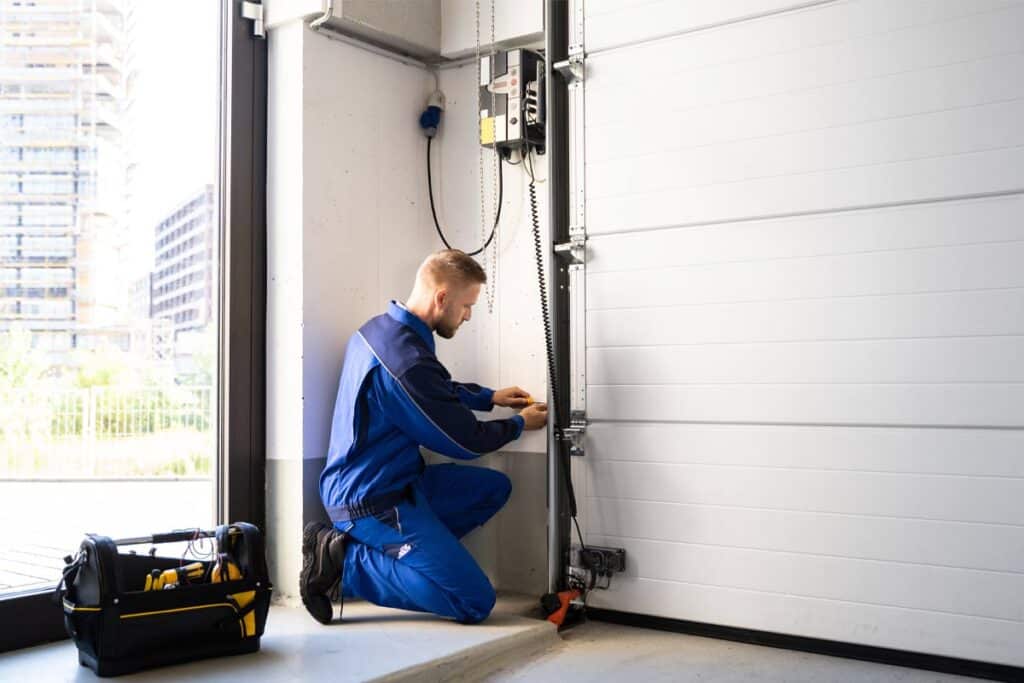
The steps above will solve most noise problems. However, sometimes, noise is a symptom of a deeper, more dangerous issue. Your easy fixes didn’t work? It’s time to call a professional.
You MUST call a professional if you see:
- A Broken Spring: A visible 2-3 inch gap in the torsion spring.
- A Frayed or Broken Cable: These are the high-tension cables at the bottom corners.
- A Door Off Its Tracks: Do not try to force it.
- Severely Bent Tracks or Damaged Panels: A door that is visibly warped or damaged.
The ultimate test is the Balance Test. Pull the red emergency release cord on the opener (with the door closed) to disconnect it. Now, lift the door manually to your waist. Let go. A properly balanced door will stay put.
- If the door slams back to the ground, your springs are weak and are not doing their job.
- If the door flies up to the ceiling, your springs are too “hot” or over-tensioned.
This test tells you the real source of the strain on your opener. Spring adjustment is not an easy fix; it’s a dangerous job for a trained technician.
Sometimes, a door is just at the end of its life. If your door is 20+ years old and has multiple failing parts, no amount of lubricant will fix the fundamental issues. At that point, you’re likely looking at a full garage door replacement in Ottawa, which is a job that guarantees a quiet, secure, and well-insulated future.
Silence That Door and Reclaim Your Peace
A smooth, quiet garage door isn’t a luxury; it’s a sign of a well-maintained, safe, and secure home. By spending an hour this November cleaning and lubricating these key components, you can eliminate that dreadful noise and ensure your door works reliably all winter long.
However, if you’ve done the fixes and the noise persists, or if you ran into a problem (like a failed balance test or a worn-out part) that’s beyond a simple fix, don’t let it become a costly emergency. We are Capital Garage Door Ottawa, the garage door company in Ottawa that residents trust for honest, expert service. Call us at (613) 604-9779 and let our professionals make your garage door run like new.