
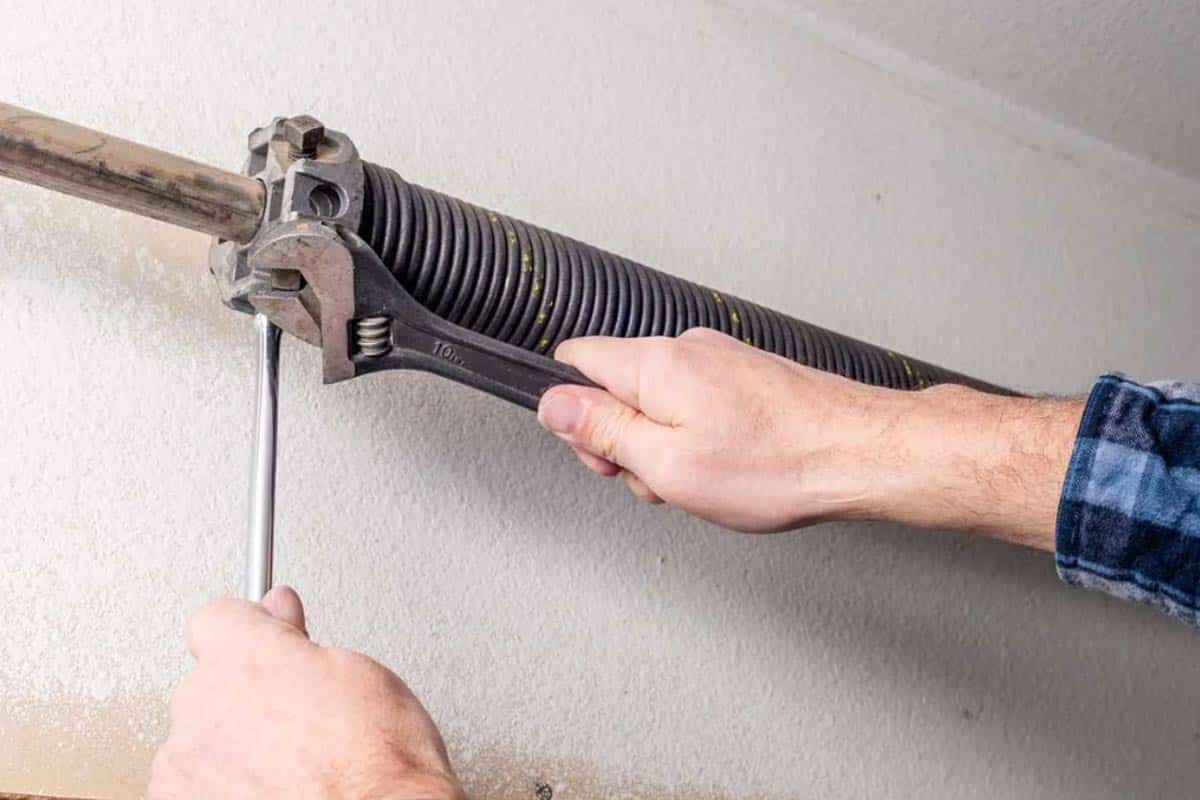
March in Canada is the ultimate stress test for your home’s largest moving part. After months of sub-zero temperatures, road salt, and moisture, a garage door that worked in October may now struggle against hardened grease and brittle metal.
Neglecting the signs will lead to catastrophic failure during the spring thaw. A twenty-minute maintenance check now is the difference between a smooth-running system and a midnight emergency.
The Science of March Fatigue on Your Garage Door
March hardware struggles when it comes down to physics. Cold causes metal to contract, altering track tolerances, while autumn lubricants thicken into a gritty, sticky paste. This friction forces your opener to work twice as hard to move the same weight.
According to a mechanical engineering study, garage door springs fail primarily through fatigue-induced fractures that begin at the inner and outer diameters of the wire coils (Joseph, Tal, 2017). These fractures result from thousands of tension cycles, and in March, the metal is at its most brittle.
Every opening puts maximum stress on these micro-fractures. A maintenance check identifies these warning signs before a spring snaps, protecting your door panels and motor from catastrophic damage.
Visual Inspection: Spotting the Early Warning Signs
 The first step in any maintenance routine involves a slow, methodical visual walk-through. Stand inside the garage with the door closed and look for specific indicators of wear that March weather tends to accelerate.
- Check the Hardware: Look at the hinges that connect the door sections. In the winter, moisture often gets trapped in the hinge joints, leading to surface rust. If a hinge is sticking, it prevents the door from “rolling” around the track radius smoothly, putting sideways pressure on the tracks.
- Inspect the Cables: Look at the high-tension lifting cables on either side of the door. Are there any frayed wires or “bird-nesting”? In March, cables are often exposed to salt spray from your car. This salt causes rapid corrosion of the steel strands. A frayed cable is a ticking time bomb; once one strand snaps, the rest follow quickly under the 150 kg load of the door.
- Examine the Rollers: Are the rollers actually rolling, or are they sliding inside the track? Sliding rollers create flat spots on the wheels and put immense strain on the motor. If you see black shavings near the tracks, your rollers are literally grinding themselves away.
- The Bottom Seal: Check the rubber weatherstripping at the base. March ice often causes this rubber to freeze to the concrete. If the seal is torn or brittle, it allows cold air and moisture to whistle into the garage, further chilling the metal components and increasing the risk of the door freezing shut.
The Sound and Motion Test
Once the visual check is complete, operate the door and pay close attention to the acoustics and the smoothness of the travel. A healthy system should hum; a failing system will scream, grind, or shudder.
- Jerky Movement: If the door shudders or seems to “catch” at certain points in the track, the tracks may have moved out of alignment due to the house shifting in the frozen ground. It could also mean a roller is seized.
- The Screeching Halt: High-pitched squealing is a cry for lubrication. It means metal is rubbing directly against metal, stripped of any protective oil. This friction generates heat, which further weakens the steel components.
- Sluggish Performance: If the door moves significantly slower than it did in the autumn, the opener’s logic board may be struggling with the increased resistance. Modern openers have “force settings” that automatically stop the door if they feel too much weight. If your door keeps reversing for no apparent reason, it is likely because the mechanical resistance has exceeded the safety threshold.
The Manual Balance Test: The Professional Standard
This is the most critical maintenance check you can perform. It reveals the true health of your torsion springs and determines if the system is safe to operate.
- Close the door completely.
- Pull the red emergency release cord. This disconnects the door from the electric opener, allowing you to move it by hand.
- Lift the door manually. You should be able to lift it with one hand. If the door feels like it weighs 90 kilograms, your springs are either improperly tensioned or reaching the end of their life cycle.
- Stop at the halfway point. Let go of the door when it is about waist-high. A perfectly balanced door will stay exactly where you left it. If it slams to the ground, the springs have lost their lifting power. If it flies upward, the springs are over-tensioned.
A door that fails the balance test is actively destroying your opener motor. The opener is designed to guide the door, not lift it. If the springs aren’t doing the work, the plastic gears inside your opener will eventually strip, leading to a costly replacement.
Lubrication: The March Shield
Lubrication is not just about stopping noise; it is about creating a moisture barrier. In March, you must use a specialized silicone-based or lithium-based garage door lubricant. Standard household oils or WD-40 are insufficient because they are too thin and actually attract dust and grit, which acts like sandpaper on your bearings.
- Rollers: Spray the bearings (the center shaft) of each roller. Do not spray the outside of nylon rollers, as they need friction to grip the track.
- Hinges: Apply a small amount to every pivot point where the metal moves.
- Springs: This is vital. Lightly coat the entire length of the torsion spring. This prevents “coil bind,” where the coils grate against each other as they wind. A lubricated spring moves more quietly and lasts significantly longer.
- The Top Rail: If you have a chain or screw-drive opener, ensure the rail is clean of old, hardened grease before applying a fresh, thin layer of lubricant.
Managing the Winter Threshold
The area where your door meets the driveway is the front line of the March battle. If you park a snow-covered car in the garage, that snow melts, runs toward the door, and pools under the seal. Overnight, this water turns to ice, effectively welding your door to the floor.
To prevent this, make it a habit to sweep out standing water or slush before it freezes. If you find the door is already frozen, do not use the opener to break it free. You will likely damage the top section of the door or burn out the motor. Use a heat gun or a hair dryer instead to melt the ice along the seal. Once the door is open, wipe the concrete threshold dry and apply a thin layer of silicone spray to the bottom of the rubber seal to prevent future adhesion.
Tighten the Nuts and Bolts
The constant vibration of an imbalanced door, combined with the expansion and contraction of metal in March, often loosens the hardware. Use a wrench to check every bolt on the hinges and the track brackets. Be careful not to over-tighten, as you can strip the holes in the thin steel panels, but ensure everything is snug. A single loose bracket can cause the track to shift just enough to bind a roller, leading to a total system jam when you least expect it.
Clear the Sensors
Do not overlook the photo-eye safety sensors. In March, these are often blocked by salt crust, spider webs, or even mounds of snow blown in from the driveway. Wipe the lenses with a soft cloth. If the small LED lights on the sensors are flickering, they are misaligned. Gently nudge them back into place until the light is solid. This simple five-second fix prevents the frustration of a door that refuses to close when you are trying to leave for work in the morning.
When Professional Expertise Is the Best Option
 While visual checks and lubrication are excellent, certain repairs are inherently dangerous. Professional expertise is essential for handling the torsion spring system; these components are under extreme tension and can cause lethal force if they slip during an untrained repair attempt. If your balance test reveals a failing spring, do not attempt to “crank” it yourself.
Professionals will also use diagnostic tools to address internal opener failures, such as flickering sensors or worn drive belts, which are often invisible to the eye. For older systems with warped tracks or rotted jambs, maintenance may no longer be sufficient. In these cases, a new garage door installation in Ottawa is often the more economical and safer choice. A professional ensures the system is perfectly balanced from day one, guaranteeing years of reliable service.
Secure Your Home Today
March maintenance protects your investment and your family’s safety. Catching small issues like dry springs or frayed cables now prevents a total breakdown during a snowstorm.
We are Capital Garage Door Ottawa, your reliable choice for garage door repair in Orleans and Ottawa. We understand how local winters impact your equipment and how to fix it right the first time. If your checks revealed a heavy door, broken spring, or grinding motor, don’t leave it to chance. Call us at (613) 604-9779 to ensure your door remains the most dependable part of your home.