
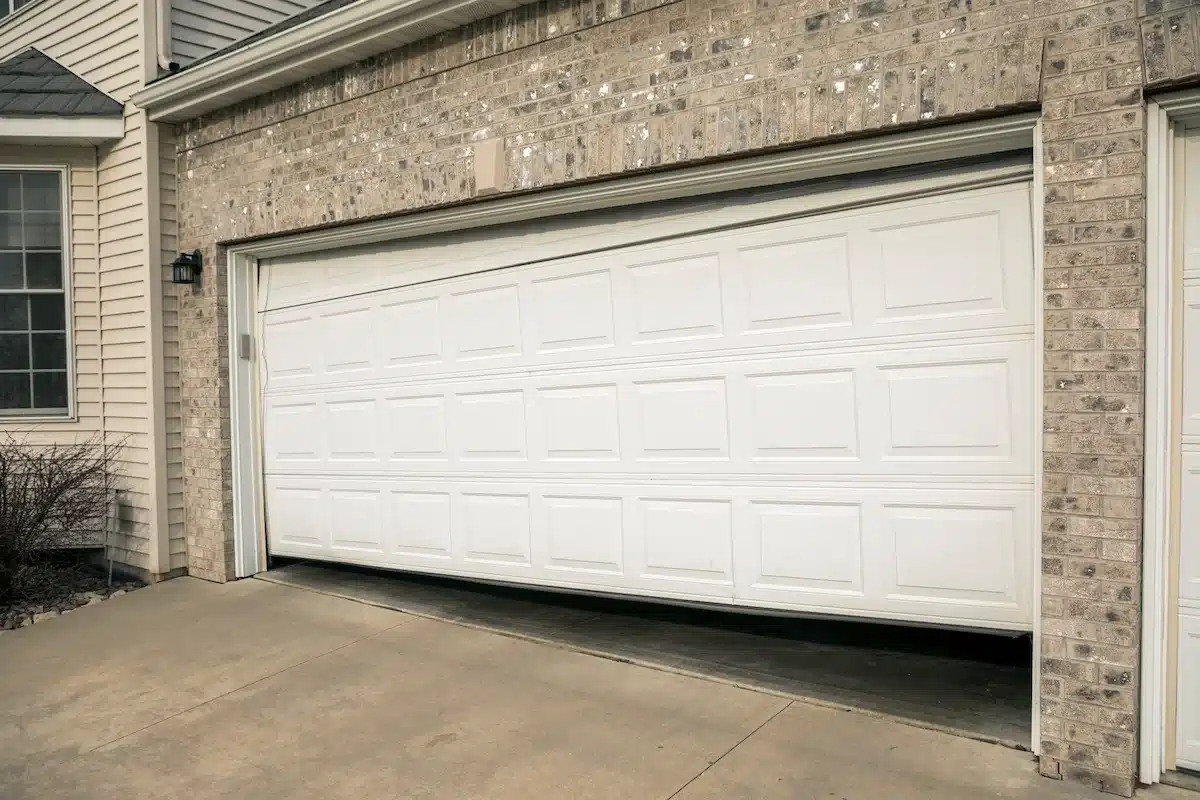
Garage doors rarely go off track out of nowhere.
Sometimes the cause is obvious: a vehicle backs into the door, or you can see visible damage after an impact. But more often, the problem builds gradually. Worn components, shifting alignment, damaged rollers, seasonal conditions, or small mechanical issues that get worse over time until something finally gives way.
Once a garage door leaves its track, the situation can become more than an inconvenience. The door may jam, tilt unevenly, stop operating, or create safety concerns that go well beyond a simple repair.
Knowing what causes a garage door to go off track helps homeowners catch developing problems earlier and make better decisions about when to call for help.
What Does “Off Track” Actually Mean?
Garage doors run on a system of rollers that travel inside metal tracks mounted along both sides of the door opening. When everything is working properly, those rollers move smoothly through the track as the door opens and closes.
An off-track problem happens when one or more rollers partially or fully leave those tracks.
When that happens, you’ll usually notice a crooked or uneven door, grinding or jerky movement, difficulty opening or closing, visible gaps between the rollers and track, or a door that feels stuck or unstable.
Depending on what caused it and how far along it is, an off-track garage door can be a straightforward repair or a more urgent safety concern.
Common Causes of an Off-Track Garage Door
Several different problems can cause a garage door to leave its track. Some happen all at once. Others develop gradually through wear, weather, or changes in how the system performs.
1. Impact Damage
Accidental impact is one of the most common causes. Backing into the door with a vehicle, hitting it with equipment or stored items, or a hard contact during operation can all bend tracks, change alignment, damage rollers, or alter how the door moves through the system.
What makes impact damage tricky is that the door doesn’t always come off track right away. Problems sometimes show up later, as damaged components keep operating under altered conditions. A minor bump that seems like nothing can turn into a bigger problem over the following weeks.
2. Worn or Damaged Rollers
Rollers take a lot of wear over a garage door’s lifetime. Constant movement, friction, and vibration gradually take their toll. As rollers age or break down, they stop moving smoothly through the track.
Signs of roller trouble include visible cracking or wear, sticking during operation, uneven travel through the track, and noisier or rougher movement than usual. When rollers stop tracking correctly, the extra strain on the rest of the system raises the likelihood of alignment problems and off-track movement.
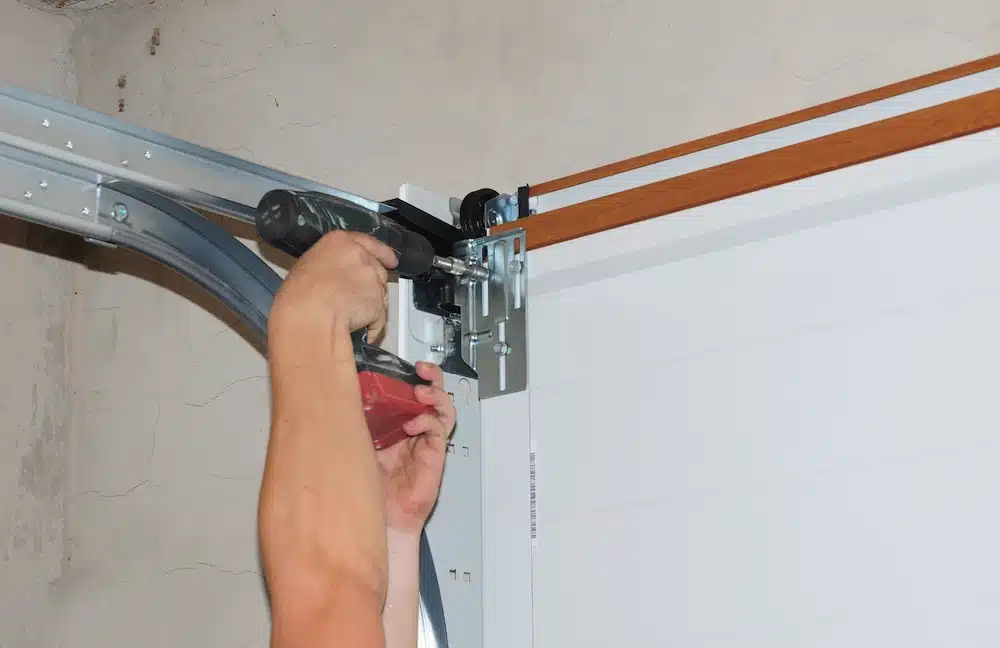
3. Bent, Misaligned, or Loosened Tracks
Sometimes the problem isn’t the rollers at all. The track itself may be damaged, bent, loose, or out of alignment.
Common causes include accidental impacts, loose mounting hardware, shifting brackets or fasteners, worn hinge points, and gradual drift from vibration and regular use. Garage door tracks follow a very specific path, and when that path changes, rollers stop traveling correctly. Visible bending, unusual spacing between the roller and track wall, loose brackets, or uneven door movement are all signs worth looking into.
4. Broken Springs or Cable Problems
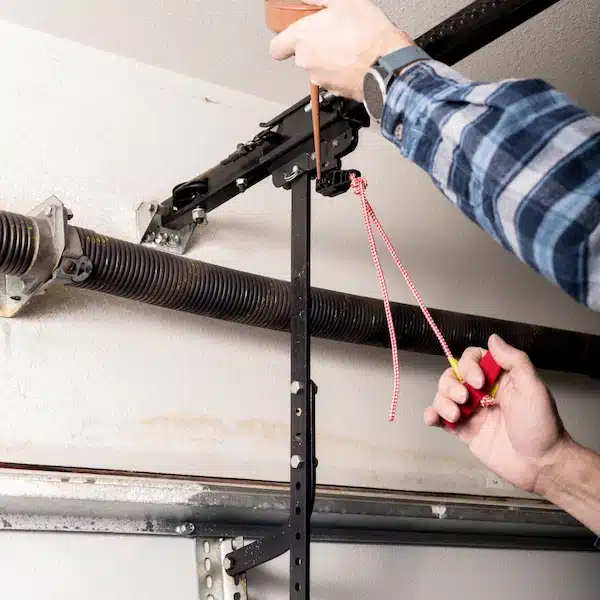
Garage door systems rely on balanced mechanical tension to lift, lower, and support the door’s weight. Springs and cables are central to keeping that balance. When a spring breaks or a cable becomes damaged, loose, or worn, the door can start moving unevenly and put abnormal strain on other components, which can lead directly to an off-track situation.
This is also where homeowners need to take the safety concern seriously.
Garage door springs and cables operate under significant tension. Failures involving these components can cause real injuries and should not be treated as routine maintenance. If a spring or cable appears to be involved, call a professional.
5. Obstructions, Debris, or Winter Conditions
Not every off-track issue involves a serious mechanical failure. Sometimes the cause is something homeowners wouldn’t think to check first.
Debris inside the tracks, accumulated dirt or buildup, small objects blocking movement, or ice near the base of the door can all interfere with normal operation and put extra stress on the system.
In Ottawa winters specifically, frozen components, cold-weather binding, and ice buildup at the door’s base contribute to garage door problems more often than most homeowners expect. Extreme cold tightens metal clearances and changes how components move, and that can push an already-stressed system past its limits.
Can You Fix an Off-Track Garage Door Yourself?
When a garage door comes off track, the instinct is to get it working again as fast as possible. That’s understandable. But it’s worth knowing where the safe limits are before attempting anything.
What homeowners can reasonably assess:
- Visible debris or obstructions in the track
- Obvious track damage or bending
- Visible roller displacement
- Ice buildup or environmental interference
- Whether the door appears severely crooked or unsupported
What homeowners should avoid:
- Forcing the door to operate
- Manually repositioning rollers
- Attempting any adjustment involving springs
- Handling cables under tension
- Improvised repairs on components that appear unstable
Garage door systems involve heavy moving parts, significant mechanical tension, and interconnected components that may already be under strain when an off-track event occurs. The wrong adjustment doesn’t just make the repair more complicated. DIY garage door repairs carry real risks, and an off-track door is not the place to find that out.
When Does an Off-Track Garage Door Become Urgent?
Some off-track situations call for more immediate attention than others. Take the situation more seriously when the door is hanging or severely crooked, when there’s visible cable or spring damage, when the door is stuck open, when components appear partially detached, or when the door seems poorly supported while moving.
A door stuck in the open position deserves particular attention. Beyond the operational problem, an open garage door creates security exposure, weather risks, and leaves vehicles and belongings vulnerable, especially in Ottawa winters when temperatures can drop sharply overnight.
Concerned About Your Garage Door?
If your garage door is crooked, unstable, partially detached, or no longer moving properly through its tracks, a professional assessment is the right next step. Given the safety risks around springs and cables, sooner is generally better than later.
A proper inspection can identify what caused the off-track condition, which components are involved, whether related damage has occurred elsewhere in the system, and what the repair actually requires. Off-track garage doors often look like a single, isolated problem but turn out to involve more than one contributing issue. Finding the actual cause matters just as much as fixing the visible symptom.
Capital Garage Door Ottawa provides garage door repair and inspection services across Ottawa and the surrounding area. If your door has come off track or something doesn’t look right, get a free estimate today.
Frequently Asked Questions
What causes a garage door to go off track?
Common causes include impact damage, worn or cracked rollers, bent or misaligned tracks, broken springs or cable failures, environmental obstructions, and accumulated wear affecting alignment or movement. In many cases, more than one factor is involved.
Is an off-track garage door dangerous?
It can be. Depending on what caused it and how far along the problem is, an off-track door may involve instability, heavy moving components under uneven load, or spring and cable damage. Springs and cables in particular should not be treated as DIY repairs.
Can I still use my garage door if it’s off track?
In most cases, no. Continuing to operate the door can worsen the damage and increase safety risk, especially if the door appears unstable, crooked, or poorly supported. Taking a visual look is fine. Operating the door is generally not.
What does it cost to repair an off-track garage door?
It depends on what’s actually wrong. A roller adjustment or minor track realignment costs considerably less than track replacement, broken spring repair, or cable work. A professional inspection is usually the only reliable way to find out what’s involved.
When should I call a professional for an off-track garage door?
When the door appears unstable, severely crooked, partially detached, or won’t operate correctly, and especially when springs, cables, or structural components appear to be involved. If there’s any doubt about whether springs or cables are part of the problem, call a professional rather than investigating further yourself.