
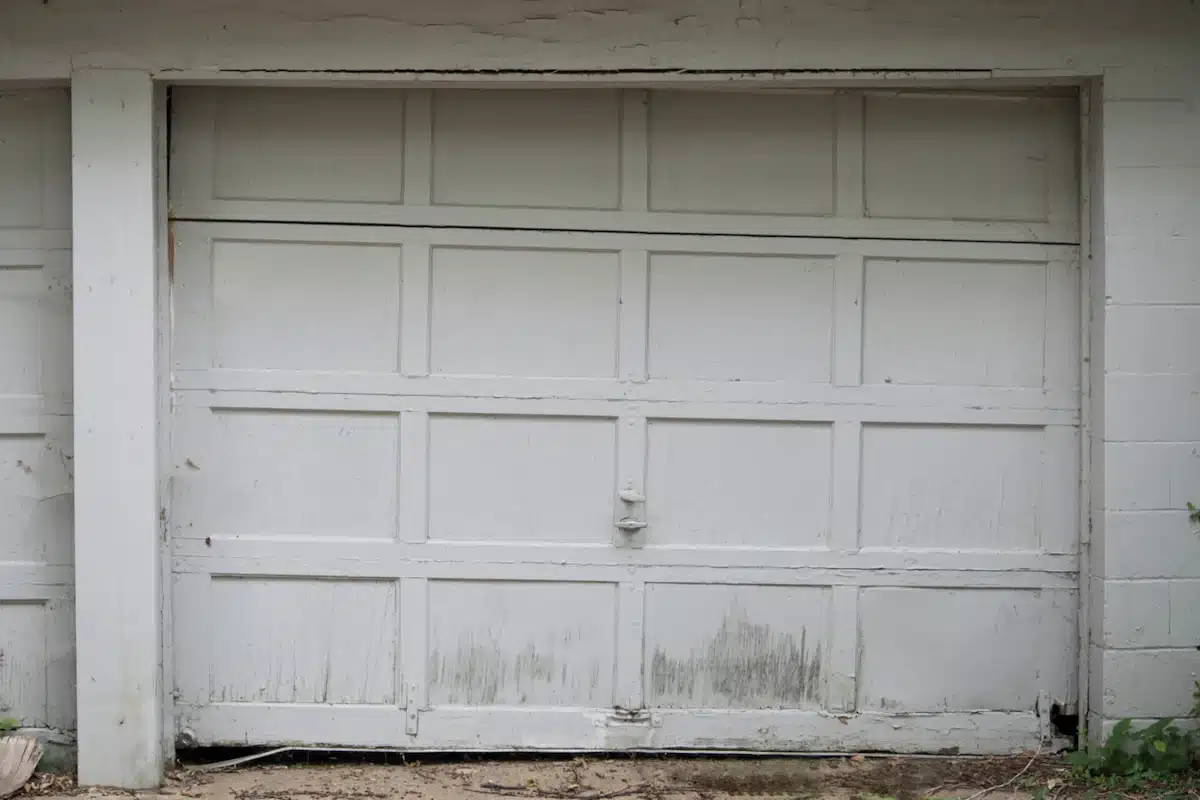
Not every garage door problem requires immediate repair.
A noisy door, minor cosmetic damage, or slower-than-usual movement is frustrating, but those issues don’t automatically justify emergency service.
Other problems are different. A garage door hanging crooked, stuck open, refusing to close, or showing signs of spring or cable failure can involve more than inconvenience. Depending on the situation, there may be real safety risks, security exposure, weather concerns, or the potential for additional damage if operation continues.
Knowing the difference helps homeowners make better decisions about when to act immediately and when a repair can reasonably wait.
Garage Door Problems That Usually Require Prompt Attention
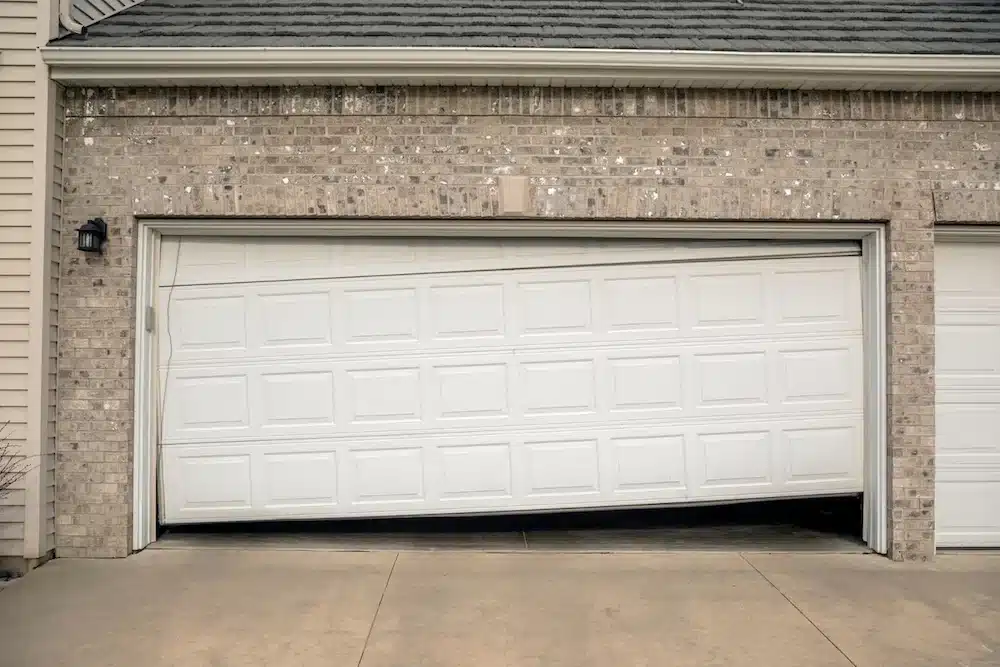
1. A Garage Door That Is Off Track, Hanging, or Unstable
An off-track garage door is one of the clearer situations where homeowners should stop and take stock before doing anything else.
When rollers leave their intended path, the door may hang crooked, bind or jam, move unevenly, or behave unpredictably during operation. The urgency isn’t simply that the door is malfunctioning. An unstable garage door can shift unexpectedly, lose support, or place abnormal stress on other components. In more severe situations, heavy sections of the system may no longer be moving as intended, which is a different kind of problem than a door that just needs an adjustment.
2. Broken Springs or Cable Failures
Garage door springs and cables control and support the full weight of the door. When these components fail, the situation typically deserves prompt attention and some caution about how homeowners respond to it.
Warning signs include a sudden loud bang from the garage, visible cable damage or looseness, uneven door movement, difficulty lifting the door manually, or a door that suddenly feels much heavier than normal.
This is one area where treating the problem like ordinary maintenance is a mistake. Garage door springs and cables operate under significant mechanical tension. When they fail, that stored force can release unexpectedly and cause serious injury. If springs or cables appear to be involved, stop operating the door and call a professional.
In Ottawa, repeated temperature swings and winter conditions can accelerate spring fatigue in aging systems. Cold weather affects how garage door components behave, which is one reason spring-related failures tend to become more noticeable during colder parts of the year.
3. A Garage Door Stuck Open
A door stuck open is often more urgent than homeowners initially assume.
Beyond the operational inconvenience, an open garage creates security exposure, weather risks, and leaves vehicles and stored belongings vulnerable. In Ottawa winters, the practical consequences escalate quickly. A garage left open overnight can lose heat rapidly, accumulate moisture and snow, and expose the space to freezing temperatures that create additional problems by morning.
Even when the cause appears relatively minor, a door that won’t close reliably usually deserves same-day attention.
4. A Garage Door That Will Not Close Properly
A door that refuses to close fully is a different problem from a door stuck open, but it can become serious quickly, particularly because of what a compromised closing system can mean for safety.
Homeowners may notice the door reversing unexpectedly, stopping before fully closing, behaving inconsistently, or leaving visible gaps beneath the door.
The sensor issue deserves specific mention here. Garage door safety sensors are designed to prevent a closing door from striking a person, child, pet, or object in the opening. When sensors are misaligned, bypassed, or malfunctioning, that protection is compromised. A door that doesn’t close reliably or predictably shouldn’t be dismissed or worked around. It should be assessed.
5. Impact Damage or Sudden Structural Changes
Some garage door emergencies start with an obvious event: backing into the door with a vehicle, a sudden loud mechanical failure during operation, abruptly shifted hardware, or a door that immediately behaves differently after an impact.
Even when the damage looks limited on the surface, impacts can affect tracks, rollers, alignment, springs, or mounting hardware in ways that aren’t immediately visible. A door that suddenly moves differently after an impact is telling you something worth listening to.
What to Do If You Think You Have a Garage Door Emergency
If you’re dealing with what looks like an emergency garage door situation, a few practical steps help reduce the risk of making things worse.
The first is to stop operating the door. Repeatedly testing a door that isn’t working rarely improves the situation and often increases strain on already-stressed components. If the door is in a partially open or awkward position, leave it there until it has been assessed.
The second is to stay away from the springs and cables. These are not ordinary household maintenance items. The tension involved is significant, and improvised adjustments create real hazard. This applies even when the fix looks straightforward.
The third is to do a visual assessment rather than a hands-on one. Look for visible instability, obvious track damage, signs of spring or cable involvement, and whether the door appears properly supported. The goal is information, not intervention.
From there, the decision is usually straightforward. Unstable or off-track doors, spring or cable symptoms, doors stuck open, and severe operating instability all justify a prompt call. Mild noise, cosmetic wear, or slightly slower movement can typically wait, provided there are no safety or security concerns present.
Problems That May Be Less Urgent (But Still Worth Addressing)
Not every garage door issue needs same-day service.
Mild operating noise, slower movement than usual, minor cosmetic damage, early wear symptoms, or intermittent inconsistencies without instability or safety concerns are all real issues, just not necessarily urgent ones.
Less urgent doesn’t mean ignore. Garage door systems have interconnected moving parts, and smaller problems often become more expensive repairs if left alone for months. In most cases, addressing developing issues within a few weeks is considerably more practical than waiting for a failure to force the decision.
Protecting the Opener from Overexertion
The garage door opener is often the most neglected appliance in the home. It is designed to guide the door, not lift its entire weight. That heavy lifting is supposed to be done by the springs. However, in the winter, when moisture gets trapped in the panels and ice adds weight to the bottom seal, the door becomes significantly heavier.
If the opener is forced to pull this extra weight day after day, the plastic drive gears inside the motor unit will eventually strip. Installing a new, perfectly balanced door in February immediately relieves this pressure. A professional installation ensures that the door can be lifted with a single hand when disconnected, allowing the opener to function smoothly and extending its lifespan by years.
Concerned About a Garage Door Problem?
If your garage door appears unstable, severely crooked, stuck open, refusing to close properly, or shows signs of spring or cable involvement, professional assessment is the right next step. The safety considerations around springs and cables make this one situation where calling sooner rather than later genuinely matters.
Unlike many home repair decisions where the cost of waiting is mostly cosmetic or financial, a compromised garage door can involve components under real mechanical tension. A professional inspection identifies which components are involved, whether immediate repair is necessary, and what the right fix looks like.
Capital Garage Door Ottawa provides emergency and same-day garage door repair across Ottawa and the surrounding area. If something doesn’t look right, get a free estimate today.
Frequently Asked Questions
Is a broken garage door spring an emergency?
In most cases, yes. A broken spring affects how the door is supported and operated, and because springs function under significant tension, continued use is generally not advisable. If you hear a loud bang from the garage and the door suddenly behaves differently, stop operating it and call for assessment.
Can I use my garage door while waiting for repair?
It depends on the issue, but for anything involving instability, spring problems, cable damage, or off-track conditions, the answer is usually no. Continued operation in those situations tends to worsen damage and increase safety risk.
What garage door problems are genuinely unsafe?
Off-track doors, broken springs, damaged cables, unstable movement, and doors that no longer operate predictably all carry real safety risk. The spring and cable category is particularly important as these components involve stored mechanical tension that can release violently if mishandled.
Does a garage door stuck open require emergency service?
Often, yes. Security exposure and weather risk alone make it worth treating as urgent. In Ottawa winters, a door stuck open overnight can create significant additional problems beyond the original failure.
Can garage door problems worsen if ignored
Yes. Depending on the issue, delayed repair or continued operation can increase component wear, worsen alignment problems, create additional strain on connected parts, and expand the eventual repair scope. Problems that begin as relatively contained issues can develop into larger system concerns if the underlying cause stays unresolved.