
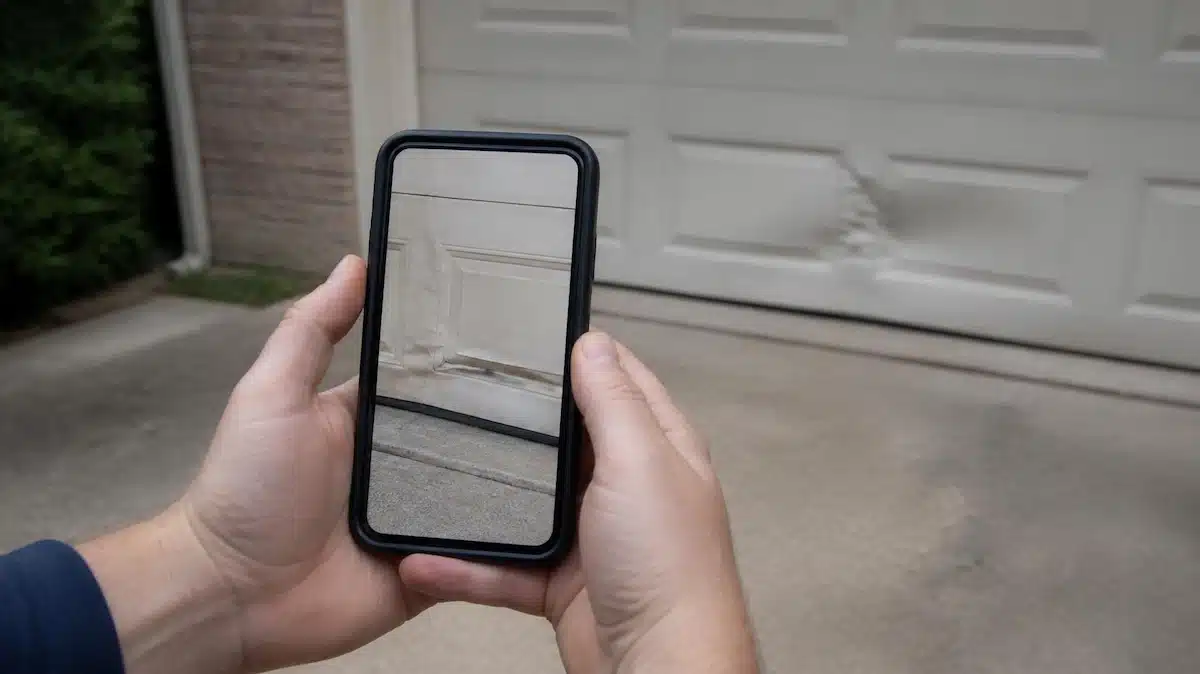
A storm rolls through, someone backs into it, or you come home to a break-in attempt, and now you’re staring at a damaged garage door wondering who’s paying for it. Whether your homeowners insurance covers it depends on what caused the damage and what your policy includes, so the honest answer is: sometimes. Check your policy rather than assuming either way.
Damage That’s Often Covered
Most policies cover sudden, accidental damage caused by events listed in your policy, rather than normal wear and tear. That usually includes:
- Wind or hail damage from a storm, including a door torn off its track or a panel caved in by debris
- Damage from a falling tree or branch
- Fire damage
- Vandalism or a forced entry attempt, including a door damaged during a break-in
- Vehicle impact damage, including damage caused by your own vehicle in some situations. Coverage depends on the circumstances and whose vehicle was involved.
Damage That’s Often Not Covered
Wear and tear isn’t something homeowners insurance is designed to cover. A spring that finally gives out after years of use, an opener that’s worn down, or a door that’s sagging from age are considered maintenance issues rather than covered damage. Water damage is another area where coverage depends heavily on the cause. A sudden burst pipe is often covered, but overland flooding and sewer backup may require separate coverage that isn’t included in a standard policy. Check that part of your coverage specifically if water is involved.
Attached vs. Detached Garage Coverage
Whether your garage is attached to your home or a separate structure can affect how it’s covered under your policy. An attached garage is typically included under your dwelling coverage. A detached garage usually falls under “other structures” coverage instead, which often has lower coverage limits than dwelling coverage. If you have a detached garage, check those limits specifically rather than assuming the same coverage applies across the board.
When Filing a Claim Actually Makes Sense
Coverage details vary a fair amount between insurers and even between policies with the same company, so the only way to know for sure is to check your specific policy or call your broker. Think through the cost-benefit before filing, too: if the repair is close to your deductible, a claim may not save you much. Whether a claim affects your future premiums depends on your insurer and claims history. It comes down to how those numbers compare for your specific situation, which is something your broker can help you weigh.
Get the Damage Assessed First
Whether or not you end up filing a claim, it helps to have a clear picture of what actually needs fixing before you call your insurer. An assessment gives you a real repair estimate to compare against your deductible (see our garage door repair cost guide for typical ranges), and if you do file a claim, most insurers will ask for documentation of the damage and the cost to repair it. If the damage is severe enough that repair isn’t practical, your policy may address garage door replacement instead, depending on the cause of damage and your coverage.
Capital Garage Door Ottawa provides garage door repairs and assessments for damage caused by storms, vehicle impacts, and forced entry. If your garage door has been damaged, contact us and we’ll assess the problem, explain your repair options, and help you determine the best way to get it fixed.
Frequently Asked Questions
Does homeowners insurance cover a garage door damaged in a storm?
Often, yes. Wind, falling branches, and hail are commonly covered causes of damage under many standard policies, but coverage details vary by insurer, so check your specific policy to confirm.
Is a broken garage door spring covered by insurance?
Usually not. A spring failing from age and normal use is considered wear and tear, which standard policies don’t cover. Insurance is generally for sudden, accidental damage, not parts wearing out over time.
I backed into my own garage door. Is that covered?
Often, yes, under many homeowners policies as accidental damage, though this varies by insurer and policy, so it’s worth confirming with your broker. Your auto policy generally only covers damage to the vehicle itself, and only if you carry collision coverage. If someone else’s car hit your door, their auto liability insurance is typically the first place to file.
Does insurance cover a damaged garage door opener?
It depends on what caused the damage. If the opener was affected by a covered event, such as a storm or vehicle impact, it may be included in the same claim. An opener that fails from age or normal use is treated as a maintenance issue, the same as a worn-out spring.
Will filing a claim raise my premium?
It can. Whether and how much your premium changes depends on your insurer, your claims history, and other factors. That’s part of why weighing the repair cost against your deductible matters before deciding whether filing makes sense.
What documentation do I need for a claim?
Most insurers ask for photos of the damage and a written repair estimate. Getting an assessment before you file gives you both, and makes the claims process faster.
What if someone else damages my garage door?
If another person damages your garage door, their insurance may be involved depending on the circumstances. Take photos of the damage, avoid making repairs before documenting the issue, and contact your insurer or broker to determine the best way to handle the claim.
Are garage doors covered under warranty instead of insurance?
Warranty and insurance cover different things. A manufacturer’s warranty typically covers defects in materials or workmanship, not damage from storms, accidents, or break-ins. If you believe your door failed because of a defect, check your warranty first. If it was damaged by an outside event, that’s an insurance question, not a warranty one.