
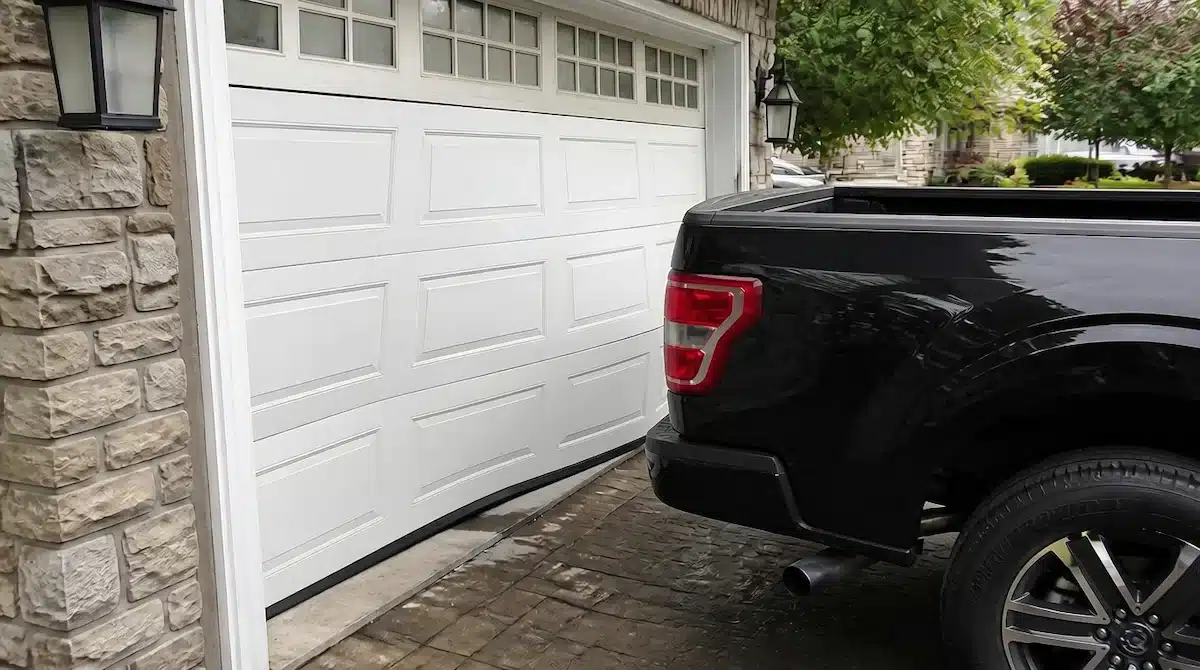
It happens faster than you’d think. You’re backing out, distracted for a second, and then there’s a bang and a crunch of metal. The damage may be more manageable than it feels in the moment, but what you do next can determine whether it stays a simple repair or turns into a more involved fix.
Don’t Try to Open or Close It
If the door still moves, that doesn’t mean it’s safe to use. An impact can knock the door off its track, bend a hinge, or throw the door out of balance even if it looks mostly fine. Forcing it open or closed can turn a manageable repair into a more expensive one involving additional parts, and if a spring, cable, or other hardware was affected by the impact, operating the door can make the damage worse or leave it unstable.
Leave the door in whatever position it landed in. If it’s stuck open, that’s a security issue for the time being, but it’s safer than pushing a damaged door through its full range of motion.
Check for the Obvious Signs of Damage
Before calling anyone, take a quick look at the door and note what you see. It helps to know what you’re dealing with, and it gives whoever comes out a head start on what happened before they arrive. Look for:
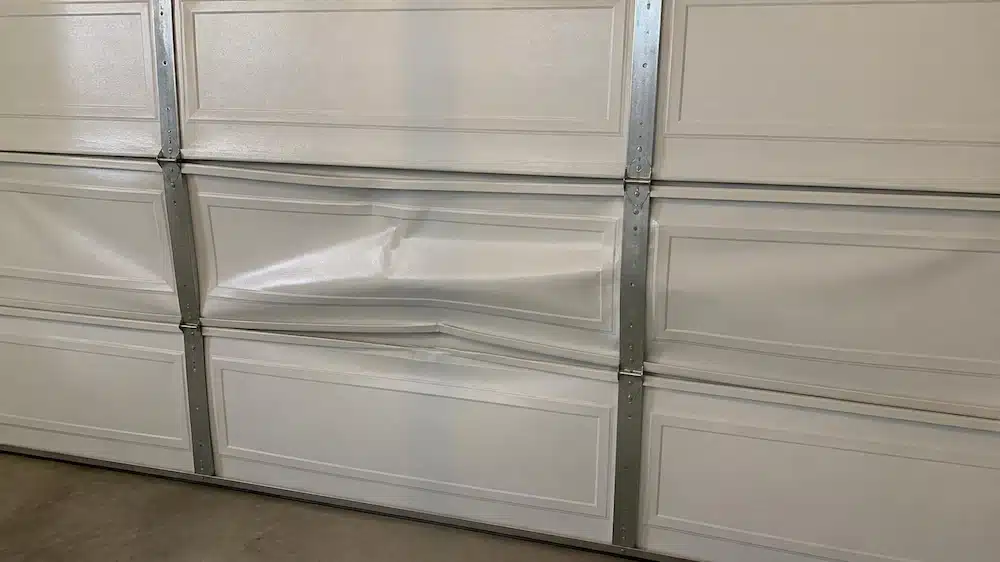
- A section that’s visibly bent, cracked, or caved in
- A track that’s pulled away from the wall or bent out of alignment
- A door that’s sitting crooked, tilted, or hanging unevenly
- Rollers that have popped out of the track
- A hinge that’s bent or broken between sections
- A cable that’s stretched, frayed, or hanging loose
- An opener that’s making unusual noises or straining to lift the door
If the impact was hard enough to move the whole door on its track, treat it as an urgent repair rather than something to deal with next week, and don’t hesitate to use our emergency repair service if it happens outside regular hours. A door that’s off track is one that can come down without warning.
If the Door Was Opening or Closing When It Happened
Hitting a door that’s already in motion is a different situation than hitting one that’s sitting still. If the opener was mid-cycle, it may keep trying to run even after the impact, pushing against something that’s now bent or jammed. That’s how a small dent can turn into additional damage to the opener or other components.
Stop the opener immediately and avoid trying to cycle the door again to “see if it still works.” Also check the opener arm and the bracket connecting it to the door, since these take a lot of the force in a mid-motion impact and aren’t always obvious to spot as damaged just by looking at the door itself.
Take Photos Before Anything Gets Moved or Fixed
If you’re going to file an insurance claim or if the damage involves someone else’s vehicle, photos of the door in its current state are worth taking before anyone touches it. Get the damaged section, the track, and the overall position of the door. It’s a small step that saves a lot of back-and-forth later.
Call for an Assessment, Not Just a Quote
A garage door is a system: the panels, tracks, springs, cables, and opener all work together under tension. An impact in one spot can damage components you can’t see just by looking at the dent. What appears to be a single bent panel may also involve track realignment, while a track issue may also mean a panel needs replacing. Have someone inspect the whole door rather than guessing at the repair.
If the damage is limited to one section, it’s often possible to replace just that section rather than the entire door, provided a matching panel is available. That’s something worth asking about directly rather than assuming a full replacement is your only option.
Capital Garage Door Ottawa repairs impact damage across the city, including dented panels, damaged tracks, and doors that have been knocked off alignment. If you’ve backed into your garage door, contact us for a free assessment and we’ll tell you exactly what it’ll take to fix it.”
Frequently Asked Questions
Can I still open my garage door after backing into it?
It depends on what’s damaged. If the door is crooked, off its track, straining, or making unusual noises, don’t operate it until it’s been inspected. A door that looks mostly fine can still have a bent track or damaged hardware, including a spring, cable, or roller, that isn’t obvious from the outside.
Is backing into a garage door an emergency?
Not always. Minor dents or cosmetic damage may not require immediate attention. However, if the impact knocked the door off its track, left it hanging unevenly, damaged the opening mechanism, or prevented it from closing securely, it should be treated as an urgent repair. Avoid operating the door until it’s been inspected, as damaged components can make it unsafe to use.
Will my insurance cover the repair?
Often, yes, under your homeowners policy as accidental damage, though this varies by insurer, so it’s worth confirming with your broker. Your auto policy generally only covers the vehicle itself, and only if you carry collision coverage. If someone else’s car hit your door, their auto liability insurance is typically the first place to file. If the damage is significant, take photos and get a repair estimate before deciding whether to file a claim. For more detail on what’s typically covered, see our full guide on homeowners insurance and garage door repair.
Do I need a whole new door, or just a repair?
Most impact damage is fixable without replacing the entire door. A single damaged section can often be swapped out on its own, and issues with the track, rollers, or opener are typically repaired rather than requiring a full replacement. A full replacement is usually only necessary if the damage is extensive or the door is older and matching parts aren’t available.
How fast can this be fixed?
That depends on the extent of the damage and whether a replacement panel needs to be ordered. Track and roller repairs can sometimes be completed quickly if the parts are on hand, while a panel replacement may take longer if the exact match isn’t in stock.