
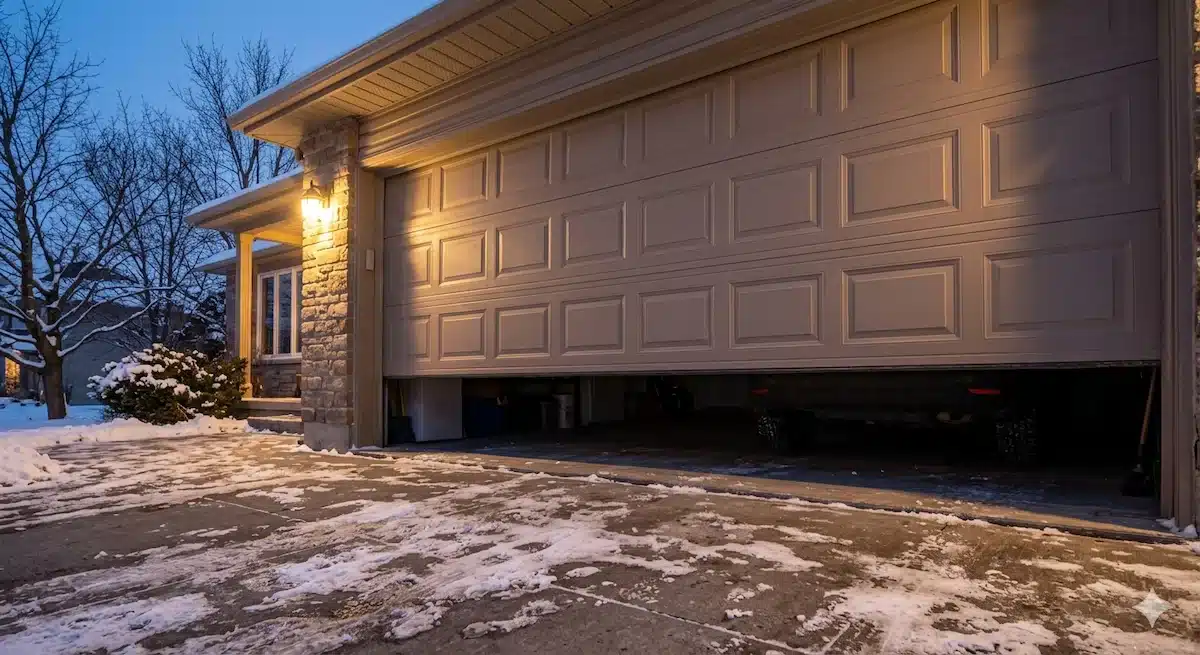
Your garage door starts to close, drops a foot, then reverses back up. You try again. Same thing. Nothing is in the way. Nothing looks broken. But the door won’t stay closed.
In almost every case, the culprit is the safety sensor system. Here’s what’s happening and what you can do about it.
What the Sensors Are Actually Doing
Every modern garage door has two small sensors mounted near the bottom of the tracks, one on each side. One sends a continuous infrared beam across the opening; the other receives it.
When the beam is clear, the door closes normally. When the beam is interrupted by a person, a pet, a bike, or anything else, the door stops and reverses. That’s the system working exactly as designed.
Sometimes, though, the sensors act as if something is blocking the beam even when the opening is completely clear. When that happens, your door won’t close no matter what you do, because as far as the opener is concerned, something is always in the way.
Why Ottawa Garages Are Particularly Prone to Sensor Issues
Garage door sensor problems happen everywhere, but a few things make them especially common in Ottawa:
Freeze-thaw cycles: Ottawa’s winters create small but cumulative movements in garage door hardware. Sensors that were properly aligned in the fall can end up slightly out of position by spring, especially in older or uninsulated garages.
Road salt and dust: Salt residue tracked in from driveways and roads coats garage floors, walls, and hardware over time. A fine film on a sensor lens is enough to weaken the signal significantly.
Humidity and condensation: Uninsulated garages see significant moisture fluctuation throughout the year, which affects wiring connections and sensor components over time.
The Most Common Reasons a Sensor Stops the Door
Misalignment
This is the most frequent cause. The two sensors need to be aimed precisely at each other. Even a few millimetres off is enough to break the beam intermittently or completely.
Sensors can shift from vibration over thousands of door cycles, accidental bumps from vehicles or equipment, or the kind of subtle frame movement Ottawa winters cause year after year.
Dirty or obstructed lenses
The sensor lenses are small and sit close to the floor, which means they collect dust, cobwebs, and debris regularly. A dirty lens scatters or blocks the beam even when the sensors are perfectly aligned.
This is worth checking before assuming something is broken. A clean lens sometimes resolves what looks like a serious problem.
Sunlight interference
This one catches people off guard. If your garage door faces a direction where direct sunlight hits the receiving sensor lens at certain times of day, the sunlight can overwhelm the sensor and cause it to behave as if the beam is broken, even though nothing is wrong.
The pattern gives it away: the door works fine in the morning but refuses to close in the afternoon, or vice versa. If this sounds familiar, sunlight interference is likely the cause.
Wiring problems
The sensors connect to the opener through wiring that runs along the door tracks. Over time, connections can loosen, insulation can crack or wear through, and moisture can corrode contact points.
Wiring issues tend to produce intermittent symptoms. The door works sometimes and fails others, with no obvious pattern. That kind of inconsistency often points to a wiring issue.
Aging sensors
Garage door sensors can last well over a decade, but Ottawa’s climate often shortens that lifespan in uninsulated or poorly sealed garages. When sensors are past their service life, they become unreliable in ways that don’t always have a single identifiable cause. They just stop working consistently.

What the Indicator Lights Are Telling You
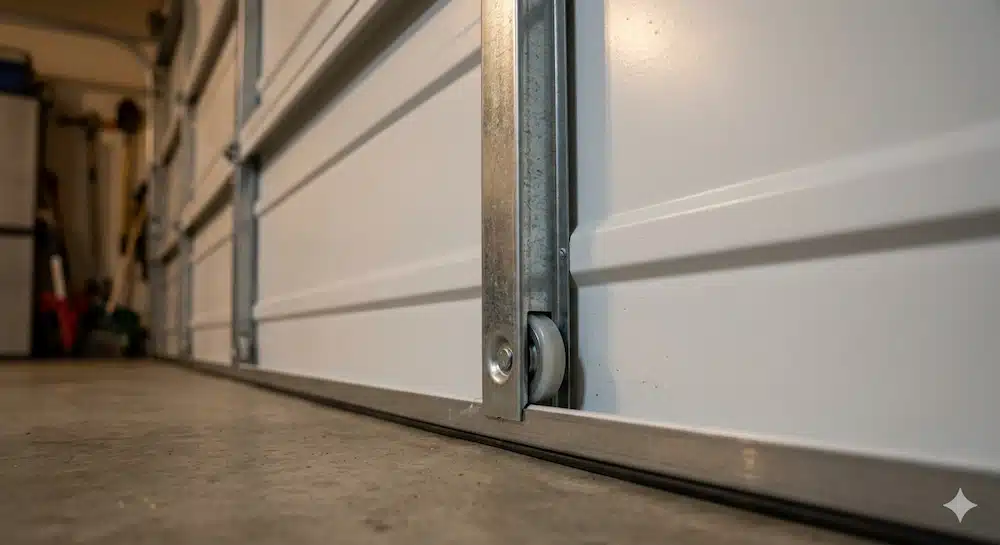
The sensors have small indicator lights, and they’re worth checking before anything else.
On most systems:
- The sending sensor (emitter) has a steady amber light
- The receiving sensor has a steady green light
If either light is blinking, dim, or off entirely, the sensors are not communicating correctly. A blinking green light almost always means misalignment. A light that’s completely off can mean a wiring fault or a failed sensor.
If both lights are steady but the door still reverses, the problem may be elsewhere in the opener system, but misaligned or dirty sensors are still worth ruling out first.
What Not to Do
When a garage door won’t close properly, it’s tempting to hold the wall button continuously to force the door down, or to disconnect the opener and operate the door manually until you can get it looked at.
Holding the wall button does bypass the sensor system on most openers, but that bypass exists for specific situations, not as a workaround for a daily sensor fault. Running your door in bypass mode means operating it without the safety system that prevents it from closing on a person, pet, or vehicle. That’s a risk that isn’t worth taking.
Disconnecting the opener and using the door manually can work as a temporary solution, but it’s still worth having the system inspected if the cause isn’t obvious.
When to Call a Professional
Sensor issues are worth professional attention any time the door isn’t behaving predictably. A door that reverses unexpectedly isn’t just inconvenient. It means the safety system isn’t functioning as designed. A few situations make it more urgent:
- The door is stuck open overnight or in a vulnerable position
- The door reverses while closing on its own, without you pressing anything
- The sensor lights are completely off rather than just blinking
- The problem is intermittent and getting worse over time
In Ottawa, where temperatures drop sharply in fall and stay low for months, a garage door that won’t close reliably is also a security and heat-loss issue that compounds quickly.
What a Technician Will Actually Do
When we look at a sensor problem, the process is systematic rather than swapping parts until something works.
We start by checking the indicator lights, then physically inspecting alignment, cleaning the lenses, and checking for obvious obstructions. If alignment and cleanliness don’t resolve it, we check the wiring run from the sensors back to the opener, looking for loose connections, damaged insulation, and corrosion. We also test how the system performs at different times of day if sunlight interference is suspected.
Most sensor problems are diagnosed and resolved in a single visit. Our vehicles carry sensors, wiring components, and hardware for all major opener brands, so if replacement is needed, it’s rarely a separate trip. In many cases, the fix is straightforward. Alignment adjustments, cleaning, or sensor replacement can often be handled during the same visit without more extensive repairs.
What to Do Next
A garage door that keeps reversing isn’t a mystery. It’s almost always the sensor system telling you something, and the fix is usually simpler and less expensive than people expect.
If your door isn’t closing reliably, stop forcing it and get it looked at. Sensor problems don’t resolve on their own, and the longer they go unaddressed, the more unpredictable the door becomes.
If you’re dealing with a garage door that won’t close properly, the team at Capital Garage Door Ottawa can inspect the system, identify the cause, and recommend the appropriate repair. Same-day service is available throughout Ottawa and the surrounding area. Request a free estimate online or call (613) 604-9779.
Frequently Asked Questions
Why does my garage door reverse immediately after I press the button to close it?
This usually means the sensors aren’t communicating properly. The opener receives a signal that the beam is broken and reverses as a safety precaution, even if nothing is physically in the way. Misalignment, a dirty lens, or a wiring fault are the most common causes.
Can I clean the sensors myself?
Yes. Wiping the sensor lenses with a dry cloth to remove dust and debris is safe and occasionally resolves the problem on its own. If cleaning doesn’t help, the issue is likely alignment or wiring, which is worth having a technician look at.
My garage door works fine when I hold the wall button but not with the remote. Is that a sensor problem?
Not necessarily. Holding the wall button bypasses the sensor system on most openers, which is why it works. If the door closes normally that way but reverses otherwise, it strongly suggests the sensors are the issue rather than the remote or opener itself.
Will my garage door work at all if a sensor fails completely?
It depends on the opener model. Most modern openers will refuse to close the door entirely if a sensor has failed or is disconnected, since the safety system can’t be confirmed. Some older models may still operate but without protection. Either way, a failed sensor should be repaired rather than worked around.
How do I know if I need sensor repair or a full sensor replacement?
A technician can usually determine this during the diagnostic visit. Misalignment and dirty lenses are repaired without replacing anything. Wiring faults may require repair or replacement depending on the extent of the damage. Sensors that have simply failed due to age are replaced. In many cases, repair is sufficient.