
When the power goes out during an ice storm, most people are thinking about the furnace, the fridge, and whether the sump pump is still running. Your garage door usually isn’t on that list until it’s the thing standing between your car and a driveway coated in ice.
The good news is that a power outage doesn’t usually mean your garage door is stuck. Most garage doors can be disconnected from the automatic opener and operated manually. The important thing is knowing how that works, when it is safe to do, and what you can expect from your door once the power is restored.
Why Your Garage Door Opener Stops Working
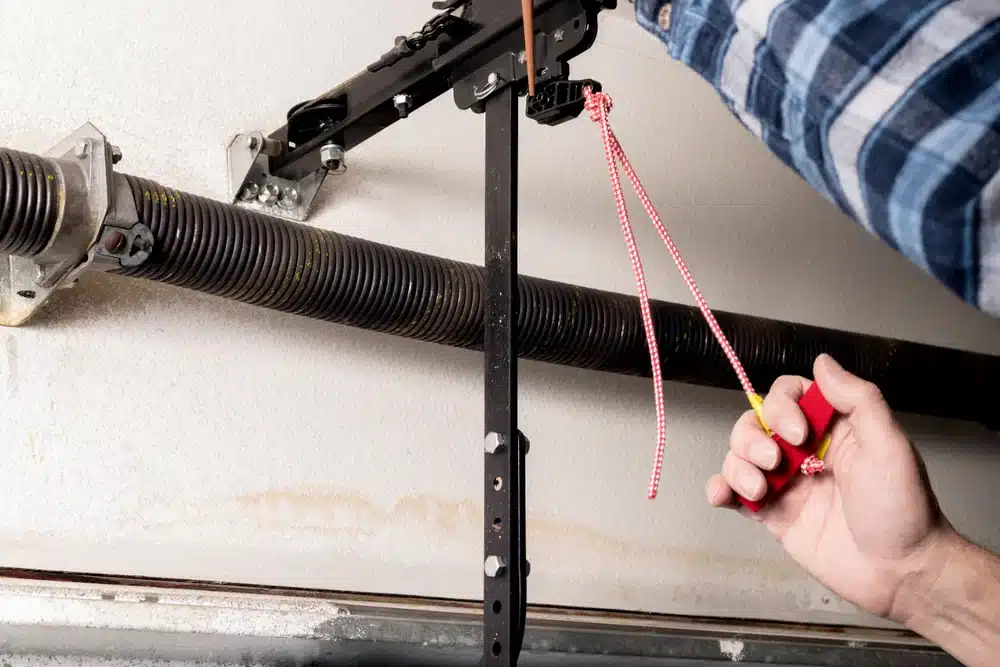
A standard garage door opener runs on household electricity, so when the power goes out, the motor can no longer respond to the remote or wall button. Most residential openers have a manual emergency release, usually a cord that disconnects the door from the opener so it can be lifted by hand.
A properly balanced door should be manageable to operate manually because its counterbalance system offsets much of the door’s weight. If the door is unusually heavy, damaged, or poorly balanced, however, it may be difficult or unsafe to lift. Don’t force a door that doesn’t move normally.
If you use the manual release to get your car out, the door remains disconnected from the opener until it is re-engaged. Until then, you’ll need to open and close it by hand, and the opener won’t operate the door automatically.
Power Outages Can Last for Days
Freezing rain can weigh down power lines and tree branches, and outages can last for hours or, after a major storm, considerably longer. That’s worth considering if you rely on your garage as a main way in and out. A manual release may be fine for getting your car out once, but having to operate the door by hand for several days can quickly become a hassle.
How a Garage Door Opener Battery Backup Works
A battery backup is designed to keep your garage door opener working when the power goes out. It’s a rechargeable battery built into the opener or added to it, and it remains charged while the garage has regular power. When the power cuts out, the battery takes over automatically, allowing you to continue opening and closing the door with the remote or wall control.
How long the battery lasts depends on the opener, battery condition, door weight, temperature, and how often the door is used. Most systems are designed to provide multiple cycles during an outage, which is generally enough for normal trips in and out during a shorter outage. Battery operation may also be slower than normal as the opener conserves its available charge.
Can Your Opener Use a Battery Backup?
Some openers have battery backup built in, while others can accept a compatible backup unit. Older or incompatible models may need to be replaced if battery backup is a priority. Whether adding one makes sense depends on the opener you have and how important the garage is as an entry and exit point during an outage.
How to Test Your Battery Backup
A battery backup should be tested at least once a year to make sure it still works when you need it. Battery life varies by battery type, model, usage, and temperature, and extreme temperatures can affect performance.
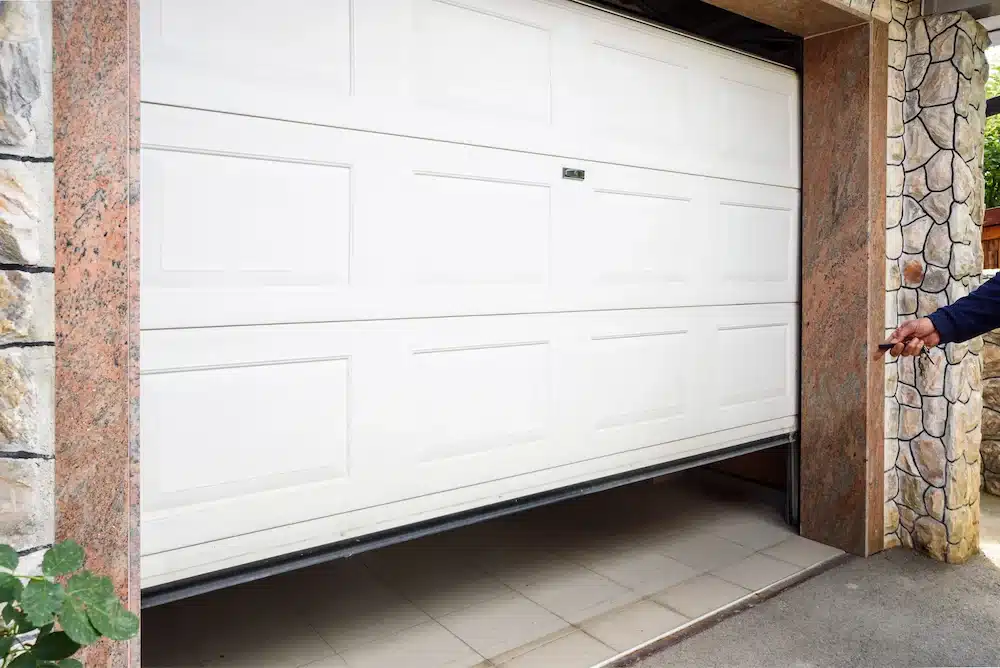
To test the system, disconnect power to the opener and use the remote or wall control to open and close the door. The opener should continue operating on battery power, although it may run more slowly than normal. Once you’ve confirmed that the backup is working, restore power to the opener. Check your opener’s manual for any model-specific testing instructions or battery indicators.
Capital Garage Door Ottawa installs battery backup systems and can determine whether your existing opener supports one or whether the opener would need to be replaced. If the last power outage left you lifting the door by hand, contact us to find out what options are available for your garage door opener.
Frequently Asked Questions
Does a garage door work in a power outage?
A garage door with a standard automatic opener won’t operate using the opener without household power. You can usually disconnect the door using the manual release and operate it by hand, unless the opener has a battery backup.
How do I get my garage door back on automatic after a power outage?
If you used the manual release during an outage, the door needs to be re-engaged with the opener once power is restored. The exact process varies by opener, but it generally involves reconnecting the door to the opener’s carriage or drive mechanism and then testing it from the wall button or remote. If it doesn’t reconnect properly or doesn’t operate normally afterward, the opener or door may need to be inspected.
How long does a garage door battery backup last during an outage?
It depends on the opener and battery, as well as how often the door is used and the conditions around it. Battery backups are generally designed to provide multiple door cycles during an outage, but the available capacity varies by system. Cold weather and an aging battery can also reduce performance. The purpose is to keep the door usable during an outage, not to provide unlimited operation.
Can I add battery backup to the opener I already have?
In many cases, yes, if the opener is compatible with an add-on battery unit. Older or incompatible models may not support one at all, in which case the opener would need to be replaced to add the feature.
Is using the manual release during an outage safe?
The manual release is designed to disconnect the door from the opener so it can be operated by hand. Using it as intended should not damage the opener, but the door itself still needs to be in good working condition. A properly balanced door should be manageable by hand, while a large, damaged, or poorly balanced door can be difficult or unsafe to lift.
How long do the batteries in these systems typically last before needing replacement?
There isn’t one replacement interval that applies to every battery backup. Battery type, opener model, usage, and temperature all affect battery life. Rather than relying on a fixed lifespan, test the backup periodically and replace the battery when it no longer holds enough charge to operate the door as expected.