
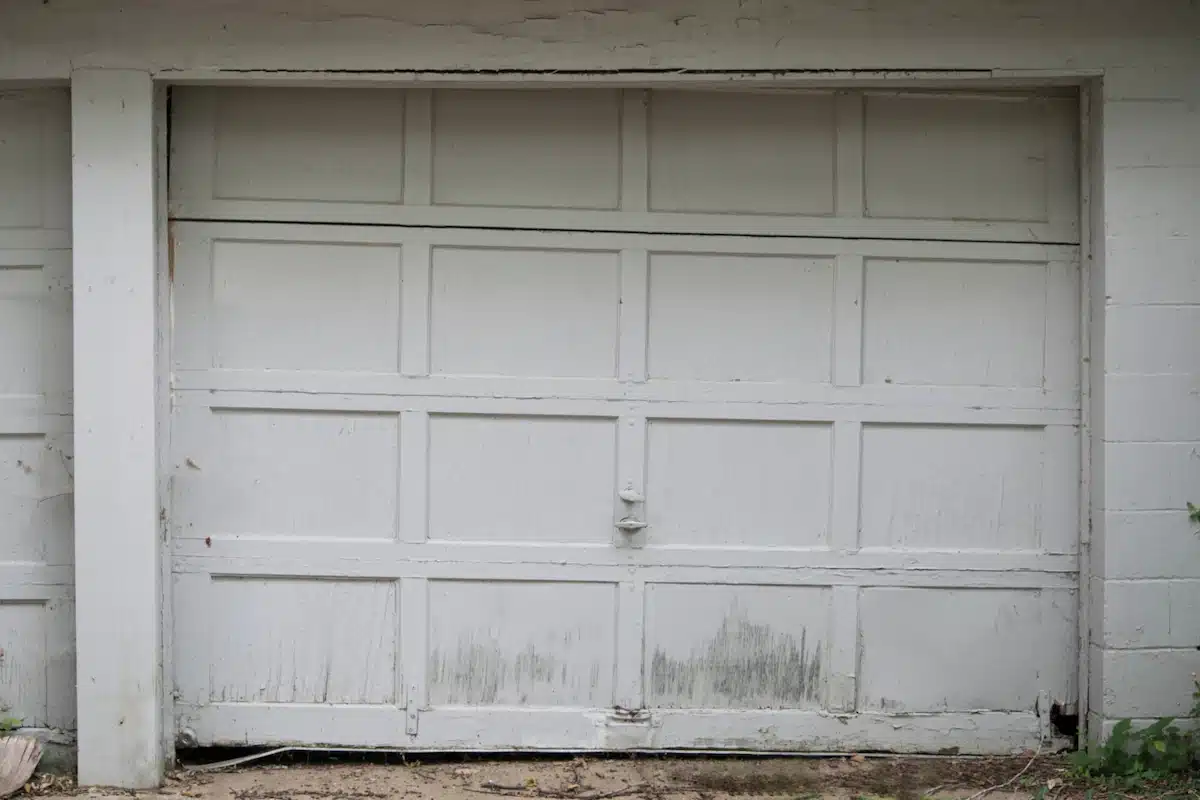
A dented or bent garage door panel does not always mean you need a new garage door. If the damage is limited to one section, you may be able to repair the panel or replace it and keep the rest of the door.
The right choice depends on more than how the damage looks. A garage door works as a connected system, so one bad panel can affect the hinges, rollers, tracks and opener. The door’s age and overall condition matter too, along with whether a matching panel can be sourced.
Repair, Replace One Panel or Replace the Door
Panel damage usually leads to one of three outcomes:
- Repair the existing panel when the damage is minor and the section is still structurally sound.
- Replace the damaged panel when it cannot be restored but the rest of the door is in good shape.
- Replace the whole door when several sections are damaged, the door has broader problems or a suitable panel is not available.
The cheapest fix today is not always the best one over time. What matters is how well the whole door works and whether the repair will hold up.
Minor Damage Can Often Be Repaired
Small dents, scratches and surface damage can often be repaired when the panel has kept its shape and still moves properly with the sections around it.
The material makes a difference. A shallow dent in a steel panel can sometimes be worked out, while aluminum tends to stretch or crease after an impact and is harder to restore. Wood can be repaired when the damage stays on the surface, but rot, deep cracks and warping usually mean the section has weakened. On an insulated panel, the damage can also reach the insulation beneath the visible surface.
The line to draw is between cosmetic and structural damage. A panel that sits evenly and moves smoothly may only need a limited repair, whereas a panel that flexes as the door moves or no longer aligns with the surrounding sections likely has structural damage that repairing the dent alone will not solve.
Determining whether garage door panel repair is appropriate requires looking at both the visible damage and how the section behaves during operation.
Replacing One Panel Can Preserve the Rest of the Door
Some damage is beyond repair. A panel that is split, deeply creased, sagging, bowing or rusted through, or one with damaged insulation, usually needs to be replaced. That can still be a sensible fix when the remaining panels and hardware are in good condition.
Replacement sections are not universal. The new panel has to suit the manufacturer, model, dimensions, profile and construction of your door, and it has to connect properly to the hinges and neighbouring sections. Weight matters as well. An insulated panel can weigh more than a non-insulated one, which can throw off the balance the springs were set up for.
Availability usually comes down to age. A section for a current model is generally easy to find, while one for a door that has been out of production for years may not be. Manufacturers discontinue older designs and sometimes change how their replacement sections are built.
Matching an Older Garage Door
Even when the right panel is available, it may not look identical to the rest of the door.
Years of sun, moisture, road salt and temperature swings change the colour and finish of the existing sections. A new panel in the original factory colour can look slightly different at first.
Fit and profile matter more than an exact colour match. A similar-looking panel from a different model should not be used if it cannot connect and move correctly. If a perfect visual match is not possible, the door can be refinished once the correct section is installed. Discuss this before a panel is ordered so there are no surprises afterward.
Impact Damage May Extend Beyond the Panel
Vehicle impacts are a common cause of garage door damage. Even a slow collision can send force through the panel and into the hardware holding it in place.
After an impact, watch for signs that the problem goes beyond the visible dent:
- The door sits crooked or has uneven gaps.
- A roller has slipped out of position.
- The tracks look bent or misaligned.
- The door scrapes, jerks or stops partway.
- The opener sounds strained.
- Hinges or brackets have loosened or pulled away.
A damaged door may keep opening and closing for a while, but that does not mean it is safe. Repeated use can worsen the alignment, damage neighbouring sections or cause the door to come off its tracks.
If you have backed into your garage door, do not force it open or try to straighten the panel yourself. The springs and cables carry the door’s weight under high tension, and loosening hinges or brackets on a damaged door can cause a section to shift or fall. Keep people and vehicles clear if the door looks unstable.
When Complete Door Replacement Makes More Sense
Replacing one panel loses its appeal when the door already has several problems. An older door may have worn hardware, recurring alignment trouble, poor insulation or corrosion in more than one section.
Garage door replacement can offer better value when multiple panels are damaged or a matching section is no longer available. The same goes for cases where the cost of fixing the panel plus the other existing issues approaches the price of a new door.
Age alone does not settle it. A well-maintained older door with one damaged section may be worth keeping, while a newer door with severe structural damage may need more extensive work. Decide based on the condition of the whole system and how reliable the repair will be.
A Full Inspection Helps Determine the Right Repair
The inspection should look beyond the damaged area, especially after an impact. Tracks, rollers, hinges, springs and cables all affect how safely the door operates.
If you are unsure whether the panel can be repaired or needs to be replaced, request a free estimate from Capital Garage Door Ottawa. The team can inspect the damage and explain your options before any work begins.
Frequently Asked Questions
Can I buy just one panel for a garage door?
Often, yes, but it depends on the door. The replacement section has to match the manufacturer, model, dimensions, profile and construction of the existing door. Panels for current models are usually easier to source than panels for older or discontinued doors. If a matching section is not available, replacing the full door may be the better option.
Can a garage door panel be repaired?
Sometimes. Minor dents, surface damage and scratches can often be repaired when the panel is still structurally sound. Steel is generally easier to reshape than aluminum, which tends to crease or stretch. Panels that are split, sagging, bowing, rusted through or bent enough to affect how the door moves usually need to be replaced.
How much does it cost to replace a garage door panel?
The price depends on the door’s manufacturer and model, the panel’s size, material and insulation, whether the section is stocked or has to be special ordered, and the labour involved. Older or discontinued doors can cost more because matching sections are harder to find. An inspection is the only reliable way to get an accurate figure, since the technician can confirm the panel is compatible and check whether the tracks, hinges or other hardware also need work.
Is it cheaper to repair or replace a garage door?
Repairing or replacing one panel usually costs less than a new door, as long as the rest of the door is in good condition. That changes when several panels are damaged, a matching panel is unavailable or the door has other problems. Once the combined cost of repairs approaches the price of a new door, replacement often offers better long-term value.
Does homeowners insurance cover garage door panel damage?
Coverage depends on the cause of the damage and the terms of your policy. Sudden events such as a vehicle impact, vandalism or certain storms may be covered. Gradual corrosion, wear and deterioration usually are not. If you plan to make a claim, photograph the damage and contact your insurer before repairs begin.
Does panel damage mean the opener also needs to be replaced?
Not necessarily. The opener can often stay if it was not damaged and still suits the door. It should be inspected after a significant impact, though, because a bent panel can put extra strain on the opener arm, trolley or motor.